


When two promising AI companies choose Singapore as their base, you’d expect similar outcomes. Both Manus AI and MiroMind made strategic moves to establish operations in the Lion City. Both had Chinese founders with deep technical expertise. Both recognized Singapore’s growing position as Asia’s AI hub.
Yet by March 2026, their fates couldn’t be more different.
Manus AI, despite its Singapore incorporation and Cayman holding structure, found itself trapped in a web of Chinese regulatory scrutiny that ultimately derailed Meta’s $2 billion acquisition. Its co-founders were barred from leaving China, and the deal collapsed under the weight of export control violations and technology transfer restrictions (The Straits Times, 2026).
MiroMind, meanwhile, successfully repositioned itself as a global AI research lab, with Singapore as its primary R&D hub. It attracted world-class talent from xAI and FAIR while maintaining operational flexibility across jurisdictions.
The divergence between these two companies reveals a critical truth. Where you incorporate matters far less than how you structure your operations, talent, and intellectual property from day one. For AI entrepreneurs eyeing Singapore, the lessons from this case are both cautionary and instructive.
What Makes Manus and MiroMind Different?
Both companies appeared to follow similar playbooks at first glance. ManusAI, founded by CEO Xiao Hong and Chief Scientist Ji Yichao, incorporated in Singapore with a Cayman Islands holding structure. This is a standard approach for tech companies seeking international expansion and eventual exits. The company developed cutting-edge AI capabilities that caught Meta's attention, leading to the announced $2 billion acquisition in late 2025 (Channel News Asia, 2025).
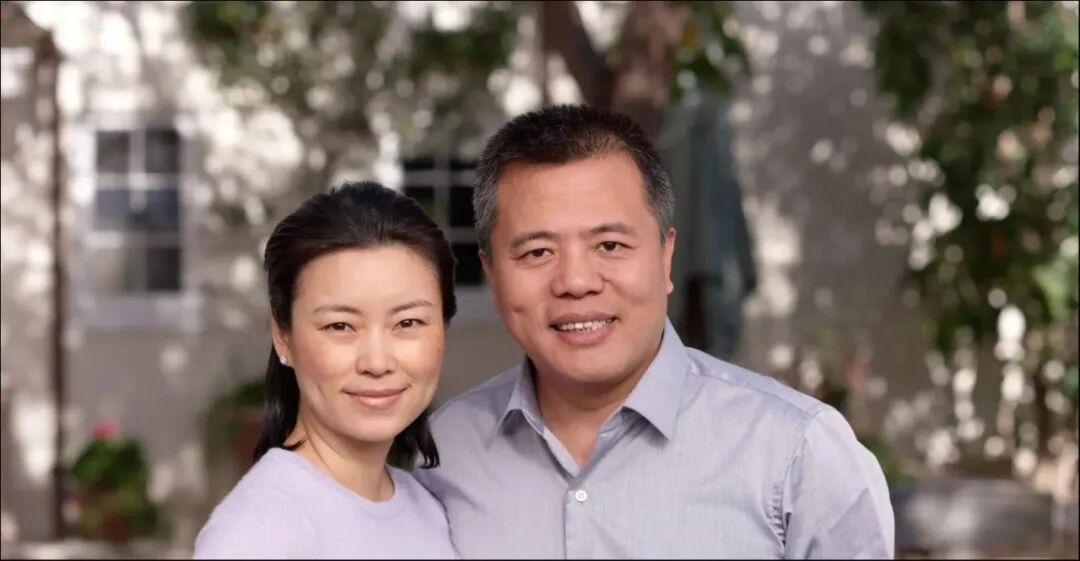
MiroMind took a fundamentally different approach. As a subsidiary of Shanda Group, founded by internet pioneers Chen Tianqiao and Luo Qianqian, MiroMind had the advantage of founders who had already established Singapore residency as early as 2009. When the company announced its reorganisation in January 2026, it was not just moving operations. It was fundamentally restructuring how and where its core research would be conducted.
The crucial difference lies not in their incorporation structures, but in their operational reality. Manus developed its core technology in China with Chinese teams, then attempted to package it within Singapore and Cayman entities. MiroMind made the strategic decision to conduct its AGI and fundamental technology research in Singapore, even relocating key Shanghai staff to support this transition.
This distinction proved decisive when regulatory scrutiny intensified. Manus faced questions about whether its technical foundation remained subject to Chinese export controls despite foreign incorporation. MiroMind, on the other hand, positioned itself as authentically international through its core research activities.
Why Manus Fell Under Heavy Regulatory Scrutiny
The regulatory pressure on Manus AI began on 8 January 2026, when China's Ministry of Commerce initiated a formal review of Meta's acquisition (SCIO, 2026). The review was not merely procedural. It covered export controls, technology transfer, outbound investment regulations, data cross-border transfer requirements, and cross-border M&A legal frameworks .
By March 2026, the Financial Times reported that the review had escalated significantly. Chinese regulators examined whether the deal violated investment rules and technology transfer regulations (Reuters, 2026). The key question was simple. Regardless of where Manus was incorporated, where was its technology developed and controlled?
The answer proved problematic. Despite Singapore incorporation and Cayman holding structures, Manus was built by Chinese founders and developed largely in China. Its technical capabilities were classified as subject to export controls. The company's algorithms, model capabilities, R&D documentation, and the knowledge held by key personnel were all considered Chinese assets under existing regulations.

China's Data Security Law and Personal Information Protection Law added another layer of complexity, particularly Articles 38 and 39 governing cross-border data transfer. For an AI company, data flows are fundamental to operations. Regulators therefore examined whether Manus's data handling practices complied with legal requirements.
The situation became untenable when Chinese authorities barred the co-founders from leaving the country in March 2026. This made it clear that, despite foreign corporate structures, the company’s core assets, including its people, were still seen as falling under Chinese jurisdiction.
At the same time, the US introduced outbound investment restrictions targeting AI and other sensitive sectors. This created additional pressure on the transaction, as it involved advanced AI capabilities that fell within regulatory focus.
Has Singapore Lost its Advantage?
The Manus situation may raise questions about Singapore’s position as a tech hub. The answer is no. However, the nature of its advantage has changed.

Singapore’s fundamentals remain strong. The corporate tax rate remains at 17 percent and applies equally to local and foreign companies. The National AI Strategy 2.0, launched in 2023, continues to position Singapore as a key node for AI research, deployment, and governance. More than 50 AI Centres of Excellence have been established, and over 4,500 tech startups now operate in Singapore.
The ecosystem is equally strong. Eighty of the world’s top 100 tech companies have a presence in Singapore. OpenAI has selected Singapore as its Asia Pacific base. The Enterprise Compute Initiative introduced in Budget 2025 provides up to SGD 150 million in support for AI transformation.
What has changed is the regulatory landscape.The intersection of US investment restrictions, Chinese export controls, and global data regulations means that simple incorporation strategies are no longer sufficient. Companies must demonstrate real operational substance.
MiroMind’s approach reflects this shift. By conducting core research in Singapore and attracting global talent, it built a genuine international operation. Its structure allows flexibility while maintaining clarity across jurisdictions.
Singapore’s value today is no longer just about being a convenient place to incorporate. It is about being a platform where companies can build real international operations.
What AI Companies Should Focus on When Setting up in Singapore?
The comparison between Manus and MiroMind offers clear guidance. Success depends on building substance, not just structure.
- Establish Genuine Research Operations
Companies should carry out real research and development activities in Singapore. This includes hiring talent, setting up teams, and ensuring that core intellectual property is developed locally.
- Plan Talent Strategy Carefully
With the upcoming ONE Pass for AI and tech professionals, companies need to align hiring and compensation strategies early to meet requirements.
- Structure Intellectual Property Thoughtfully
The location where intellectual property is created is critical. It affects regulatory treatment and long-term strategy.
- Build Multi-Jurisdictional Operations
AI companies should design operations across multiple jurisdictions, with Singapore as part of a broader global structure.
- Understand Regulatory Requirements
Companies must consider multiple regulatory frameworks across countries. Planning early reduces risk later.
- Leverage Singapore's Ecosystem
Singapore offers access to talent, capital, and partnerships. Companies that actively engage with the ecosystem are more likely to succeed.
What This Means for AI Companies Expanding Globally
The difference between Manus and MiroMind reflects a broader shift in how AI companies expand internationally.
Success today is no longer defined by where a company is incorporated. It depends on where technology is developed, how data is managed, and how operations are structured across jurisdictions.
Singapore remains a key hub for global expansion. However, its role has evolved. It is no longer a place to adjust structures after the fact. It is a platform where companies must design their international strategy from the outset.
In our work with AI companies expanding into Singapore and across the region, we have seen this shift play out clearly. The companies that succeed are not the ones that move fastest, but the ones that plan early. They think through where their technology is built, how their teams are structured, and how their operations align with regulatory expectations across markets.


